
Facilities Management
Persistent structure identity across operations, systems, portfolios, and time.
PIID™ gives facility owners, operators, managers, and technology platforms a persistent way to reference the physical structure as systems, vendors, records, and operational teams change.
Facilities Management
One structure identity across operations, maintenance, documentation, and the life of the asset.
PIID™ gives facility owners, operators, managers, and technology platforms a persistent way to reference the physical structure as systems, vendors, records, and operational teams change.
The facilities identity problem
Operators change. Systems change.The structure remains.
Facilities teams manage buildings through addresses, property records, internal asset IDs, work orders, maintenance systems, building management platforms, inspections, vendor records, and portfolio databases.
Each system serves an operational purpose.
None is designed to provide a persistent identity for the physical structure across every system and through decades of change.
Ownership can change.
Facility managers can change.
Service providers can change.
Technology platforms can change.
Records can move between systems.
The structure remains.
Without persistent structure identity, facilities information becomes fragmented around the asset it is supposed to describe.
- CMMS ID
- Work order
- Internal code
- GIS
PIID Resolve™
Resolve every facility to the physical structure itself.
PIID Resolve™ identifies, validates, and resolves physical structures to persistent infrastructure identities.
Addresses, parcels, coordinates, geometry, and supported facility records can resolve to the same physical structure through PIID™, giving operational systems a consistent structure reference across platforms, vendors, portfolios, and time.
Persistent structure identity can reduce duplicate records, matching errors, and ambiguity while maintaining continuity as operating environments change.
Know which structure every record belongs to. Persistently.
PIID Resolve™UMIP Structure Schedule™
Know every structure you operate.
UMIP Structure Schedule™ creates a documented inventory of every qualifying structure associated with a property, campus, or facility, with each structure referenced through its own PIID™.
It gives owners, operators, facility managers, institutions, and portfolio teams a clear record of exactly what structures exist, where they are located, and how each is identified.
For campuses, industrial facilities, institutional properties, mixed use sites, and multi structure portfolios, Structure Schedule™ provides structure level clarity that a single address or parcel cannot.
One property. Every qualifying structure. Clearly identified.
Coming Soon
In development
Built for facilities workflows
One persistent identity across facility operations.
Maintenance
Connect maintenance history and service activity to the same physical structure through time.
Work Orders
Maintain a consistent structure reference across work management systems, service providers, and operational teams.
Inspections
Connect inspection history, findings, corrections, and supporting records to the structure being inspected.
Capital Planning
Maintain continuity between the physical structure and renovation, improvement, replacement, and long term capital planning activity.
Vendor Coordination
Give contractors, service providers, operators, and internal teams a consistent reference to the structure being serviced.
Building Systems
Provide a persistent structure reference across building management, automation, energy, security, access, and other supported operational systems.
Ownership and Management Transitions
Maintain structure identity when ownership, property management, facility management, or operating systems change.
Portfolio Operations
Resolve buildings consistently across properties, campuses, regions, portfolios, and enterprise technology environments.
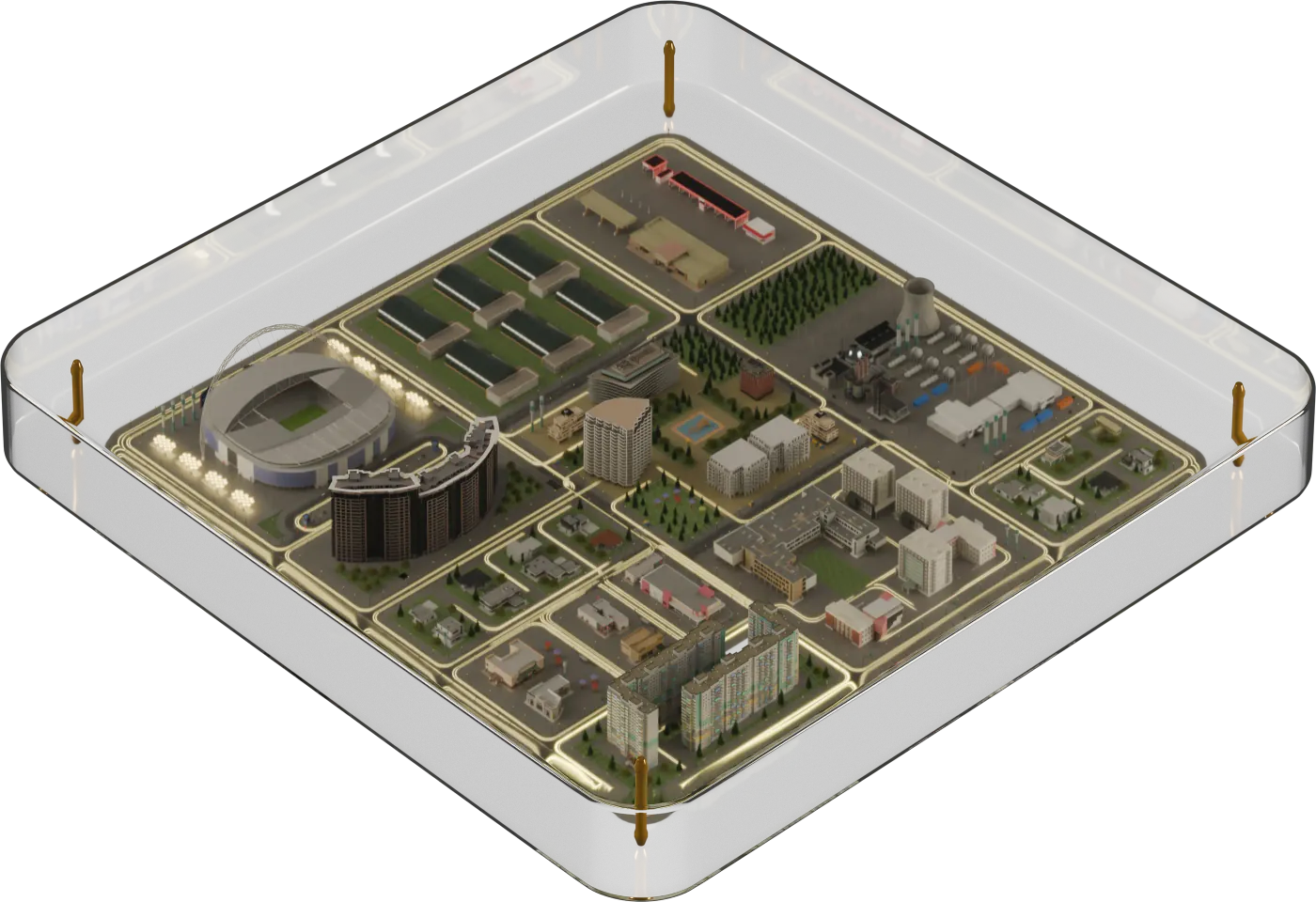
Multi structure facilities
A facility is often more than one building.
A campus or commercial property may contain offices, warehouses, garages, maintenance buildings, utility structures, storage facilities, and other qualifying permanent structures.
A single address may represent the entire site.
A parcel may describe the land.
Neither necessarily identifies every structure being managed.
PIID™ provides each qualifying structure with its own persistent identity.
UMIP Structure Schedule™ documents the structure inventory.
Facility management moves from property level approximation to structure level clarity.
Operational continuity
The operational record should remain connected to the asset.
Maintenance records, inspections, improvements, service histories, documents, and system references can accumulate across years of operation.
When facility systems or operating teams change, that information can become fragmented.
PIID™ creates a persistent structure reference around which supported operational information can remain coordinated through time.
The systems can change. The structure identity persists.
System interoperability
Different facility systems.Same physical structure.
A maintenance platform may reference an internal asset ID.
A building management system may reference another identifier.
GIS may reference geometry.
Property management may reference an address.
A vendor may reference a work order.
A portfolio system may reference a property code.
PIID™ gives those environments a persistent way to reference the same physical structure without requiring them to abandon the identifiers they already use.
Identity becomes the connection point across facility operations.
Lifecycle Report™
A connected record for the physical structure.
Lifecycle Report™ brings structure identity, property intelligence, records, documents, events, and lifecycle context together around one persistent infrastructure identity.
For facilities management, Lifecycle Report™ can support property documentation, operational review, inspections, maintenance planning, ownership transitions, due diligence, and long term understanding of the structure.
A clearer record of the asset across its operational life.
Lifecycle Report™Enterprise delivery
Built for facility technology environments.
PIID Resolve™ is delivered through enterprise APIs using structured JSON responses.
Technical teams can integrate persistent structure identity and identity resolved geometry directly into facility management platforms, maintenance systems, building management environments, GIS, portfolio platforms, analytics applications, data environments, and enterprise workflows.
API delivered. Machine readable. Built for integration at scale.
Data control
Existing facility systems remain in place.
PIID™ provides a persistent identity reference across existing operating environments.
It does not require owners, operators, institutions, technology platforms, or data providers to replace their databases, identifiers, or systems.
Existing systems retain their role. PIID™ provides continuity at the physical structure level.
Governed by GIIS™
Persistent facility identity requires consistent rules.
GIIS™ establishes the governance framework for assigning, resolving, referencing, and maintaining persistent infrastructure identity across systems and organizations.
This consistency allows the identity of the physical structure to remain stable as operators, technology environments, vendors, and ownership change.
At scale
Persistent identity for facility operations.
- 189M+PIIDs Registered
Persistent Infrastructure Identities registered across the United States.
PIID Resolve™
Structure Identity Resolution.
UMIP Structure Schedule™
Documented structure identity inventory.
Enterprise API Delivery
Structured JSON responses for direct system integration.
Independent coverage relevant to facilities management.
Facility Executive · 2026-08-11
What The Former Pfizer HQ Failure Should Make You Ask About Your FacilityIndependent coverage in Facility Executive.
Digital Construction · 2026-08-07
The built environment has an identity crisisIndependent coverage in Digital Construction.
CCR-Mag · 2026-08-04
The Built Environment Is Missing an Identity LayerIndependent coverage in CCR-Mag.
Related
Resolve physical structures to persistent infrastructure identities. PIID Resolve™ identifies, validates, and resolves structures from addresses, parcels, coordinates, geometry, and supported source records.
Identify and organize the permanent structures associated with a property, with each qualifying structure referenced through its own PIID™.
Bring structure identity, property intelligence, records, documents, events, and insights together around one persistent infrastructure identity.