
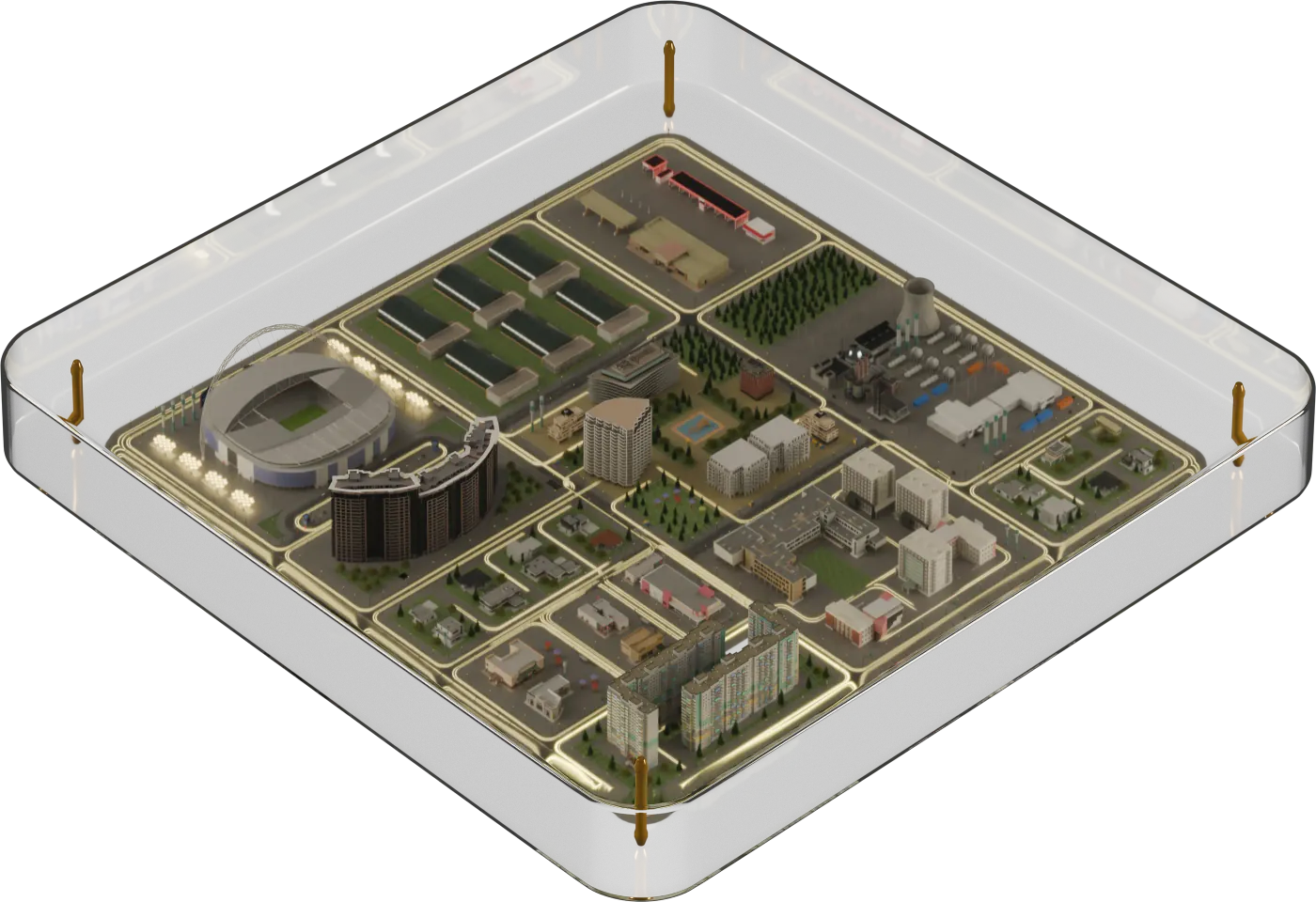
Defense Infrastructure
Persistent structure identity for the physical infrastructure supporting the mission.
Defense installations depend on complex networks of facilities, engineering environments, construction programs, real property systems, GIS, maintenance platforms, utilities, digital models, and enterprise technology.
Those environments can reference the same physical structures differently.
PIID™ gives each qualifying physical structure a persistent identity that can remain consistent from planning and construction through operation, modernization, sustainment, and decades of change.
Defense Infrastructure and Installation Management
Missions evolve. Infrastructure persists. Its identity should too.
PIID™ gives each qualifying physical structure a persistent identity that can remain consistent from planning and construction through operation, modernization, sustainment, and decades of change.
The Defense Infrastructure Identity Problem
One installation. Many systems.Many structure references.
Defense infrastructure can be represented through installation identifiers, building numbers, addresses, parcels, coordinates, GIS objects, engineering records, construction project identifiers, real property systems, maintenance systems, utility references, digital models, and enterprise applications.
Each reference can be valuable within the environment that created it.
But those references do not necessarily provide one persistent identity for the physical structure itself.
PIID™ establishes that persistent structure reference.
Different systems. Same physical structure. One persistent identity.
- Installation no.
- Building no.
- GIS object
- Real property
- CMMS
- Project ID
Built Environment Scope
Identity for the infrastructure itself.
PIID™ is designed to identify qualifying physical structures within the built environment.
It does not identify personnel.
It does not identify weapons systems.
It does not identify tactical activity.
It does not depend on classified mission information.
Its purpose is persistent physical infrastructure identity.
Buildings. Facilities. Permanent structures. Persistent identity.
Military Engineering and Installation Infrastructure
Persistent identity from planning through the life of the asset.
Defense infrastructure moves through:
Planning
Survey and site development
Engineering
Design
Construction
Commissioning
Real property accountability
Facilities operations
Maintenance
Sustainment
Restoration
Modernization
Future redevelopment
Each stage can introduce different systems, project identifiers, engineering references, facility numbers, spatial objects, contractors, and technology platforms.
PIID™ provides a persistent identity for the physical structure underneath those changing environments.
- PLAN
- DESIGN
- BUILD
- COMMISSION
- OPERATE
- SUSTAIN
- RESTORE
- MODERNIZE
PIID™
PLAN
DESIGN
BUILD
COMMISSION
OPERATE
SUSTAIN
RESTORE
MODERNIZE
PIID™
PLAN
DESIGN
BUILD
COMMISSION
OPERATE
SUSTAIN
RESTORE
MODERNIZE
PIID™
Design it. Build it. Operate it. Modernize it. Keep the same structure identity.
Installation Level Identity
Installation identity is not structure identity.
A military installation can contain hundreds or thousands of qualifying physical structures.
An installation identifier provides broader site context.
PIID™ provides structure level identity.
Each qualifying structure can maintain its own persistent PIID™ while remaining associated with the broader installation.
Installation context above. Persistent structure identity underneath.
Multi Structure Installations
One installation. Many structures.Persistent identity for each qualifying asset.
INSTALLATION
Structure 001
PIID™
Structure 002
PIID™
Structure 003
PIID™
Structure 004
PIID™
Structure 005
PIID™
- GIS
- Real Property
- CMMS
- BIM
- Engineering
- Utilities
- Energy
- Digital Twins
- Enterprise Systems
INSTALLATION
Structure 001
PIID™
Structure 002
PIID™
Structure 003
PIID™
Structure 004
PIID™
Structure 005
PIID™
GIS
Real Property
CMMS
BIM
Engineering
Utilities
Energy
Digital Twins
Enterprise Systems
UMIP Structure Schedule™
Document the physical structure inventory of the installation.
UMIP Structure Schedule™ is being developed to document qualifying structures associated with a property through PIID™, location, geometry, and parcel relationship.
For defense installations, Structure Schedule™ can create a clear structure level inventory across large and complex physical environments.
Know what structures exist. Know where they are. Know which structure is being referenced.
Coming Soon
In development
PIID Resolve™
Resolve fragmented defense infrastructure references to persistent identity.
PIID Resolve™ can reconcile supported references including:
Address
Parcel
PIID™
Coordinates
Geometry
Supported Source Reference
to the same physical structure.
Submit a reference. Resolve the structure. Return persistent identity.
PIID Resolve™Real Property Continuity
Give real property systems a persistent structure reference.
Real property environments maintain critical information about defense facilities.
Those systems can retain their existing records, identifiers, classifications, and workflows.
PIID™ provides a persistent structure identity capable of complementing those environments and maintaining continuity as surrounding systems change.
Real property systems retain their role. PIID™ provides the persistent structure reference.
CAD, BIM and Digital Delivery
Carry identity from project delivery into permanent operations.
Defense construction and modernization programs generate extensive engineering and digital project information.
Models change.
Files change.
Project identifiers change.
Project teams eventually leave.
The physical structure remains.
PIID™ provides an identity capable of continuing from design and construction into long term installation operation.
The project ends. The structure continues. Its identity should too.
GIS, Mapping and Geospatial Intelligence
Connect spatial systems to persistent structure identity.
Defense installations depend heavily on geographic context.
GIS tells systems where infrastructure exists.
Building geometry describes physical form.
PIID™ identifies the physical structure itself.
PIID Resolve™ reconciles supported spatial references to persistent identity.
Location tells you where. PIID™ tells you which structure.
Asset Management and CMMS
The maintenance system can change.The structure identity should not.
Defense facilities may pass through multiple generations of CMMS, EAM, facilities, and maintenance technology.
PIID™ provides a structure level reference independent of the current maintenance platform.
A legacy CMMS can reference PIID™.
A replacement system can reference the same PIID™.
Migrate the system. Preserve the structure reference.
Engineering Continuity
Different engineering disciplines.Same physical asset.
Structural engineering.
Civil engineering.
Mechanical engineering.
Electrical engineering.
Environmental engineering.
Energy engineering.
Facility engineering.
Each can maintain different records and project identifiers.
PIID™ gives supported engineering environments a persistent reference to the same physical structure.
Different disciplines. Same facility. Persistent identity between them.
Military Construction
Construction is one stage in the life of defense infrastructure.
A physical structure can move through planning, design, construction, commissioning, operation, sustainment, modernization, and future redevelopment.
Construction project identifiers eventually lose their relevance.
The physical structure does not.
PIID™ provides the identity capable of continuing after project closeout.
Project identity ends. Structure identity persists.
Sustainment, Restoration and Modernization
Modernize the facility without resetting its identity.
A defense structure may undergo decades of:
Maintenance.
Restoration.
Renovation.
Systems replacement.
Energy modernization.
Structural improvements.
Technology upgrades.
Mission changes.
Capital programs.
Each program can create new records and project identifiers.
PIID™ provides persistent identity underneath those changes.
New program. Same structure. Same persistent identity.
Energy and Utilities
Connect infrastructure services to the physical structures they support.
Defense installations depend on power, water, communications, distributed energy, backup systems, storage, resilience infrastructure, and other services.
Those environments maintain their own service and operational references.
PIID™ complements them with persistent structure identity.
The service relationship can change. The structure identity remains.
Infrastructure Resilience
Maintain the same structure identity through disruption and recovery.
Severe weather, fire, infrastructure failure, and other events can involve facilities organizations, engineers, utilities, contractors, insurers, government agencies, and recovery teams.
PIID™ provides a persistent physical structure reference before, during, and after an event.
Before the event. During the event. After the event. Same structure identity.
Digital Twins and Simulation
Give every digital representation a persistent physical reference.
Defense infrastructure will increasingly be represented through digital twins, engineering models, simulations, and analytical environments.
The representation can change.
The physical structure remains.
PIID™ identifies the actual physical structure beneath the model.
Digital representations change. Physical asset identity should persist.
Lifecycle Continuity
Infrastructure can outlive generations of technology.
A defense structure may remain operational through decades of mission changes, modernization programs, maintenance systems, technology migrations, engineering projects, and organizational transitions.
Lifecycle™ provides the framework through which supported records, relationships, events, and history can remain connected around the same PIID™.
The environment changes. The structure identity carries forward.
Lifecycle™Enterprise Interoperability
Defense infrastructure does not need one database.
GIS can remain GIS.
CMMS can remain CMMS.
Real property systems can retain their function.
BIM can remain BIM.
Engineering applications can remain engineering applications.
Energy platforms can remain energy platforms.
Digital twins can remain digital twins.
PIID™ provides the persistent structure reference they can share.
Different systems retain their role. Identity becomes the connection point.
Data Control
Connection does not require centralization.
UMIP does not require defense organizations, engineering teams, technology providers, or data partners to move all underlying infrastructure information into one repository.
Existing systems can remain.
Existing identifiers can remain.
Source records can remain within the environments responsible for them.
PIID™ provides the persistent structure reference through which supported systems can coordinate.
Persistent identity without mandatory data centralization.
Artificial Intelligence
AI needs persistent physical infrastructure context.
AI can increasingly interact with facilities records, maintenance history, geospatial data, engineering information, energy systems, documents, digital twins, and infrastructure analytics.
PIID™ provides persistent structure identity.
Lifecycle™ provides continuity through time.
Persistent identity creates persistent machine context.
System Independence
Physical infrastructure should outlive the software identifying it.
A structure may remain in service longer than many CMMS, GIS, BIM, engineering, or enterprise platforms surrounding it.
PIID™ provides a reference independent of any single vendor or technology environment.
Platforms are replaceable. Physical structure identity should persist.
Enterprise Delivery
Built for integration into existing infrastructure systems.
PIID Resolve™ supports structured enterprise delivery through machine readable JSON responses.
Supported integration environments can include:
GIS
CMMS
EAM
Engineering Systems
BIM
Real Property Systems
Facilities Platforms
Energy Systems
Digital Twins
Enterprise Applications
Artificial Intelligence
API delivered. Machine readable. Built for integration at scale.
Built on UMIP
PIID™
Persistent identity for the physical structure.
PIID Resolve™
Resolves supported infrastructure references to persistent identity.
Lifecycle™
Maintains continuity around structure identity through time.
UMIP Registry™
Maintains persistent infrastructure identity and supported registry context.
UMIP Structure Schedule™
Documents qualifying structures across complex installations.
Coming Soon
In development
Governed by GIIS™
Persistent defense infrastructure identity requires consistent rules.
GIIS™ establishes the governance framework supporting consistent Persistent Infrastructure Identity across systems, organizations, technology environments, and time.
Identity establishes the reference. Governance protects its continuity.
At Scale
Persistent identity for infrastructure at national scale.
- 189M+PIIDs Registered Across the United States
Defense infrastructure will continue becoming more digital, interconnected, automated, and intelligent.
The physical structures beneath those systems require persistent identity capable of continuing through generations of change.
Structure Identity → Interoperability → Lifecycle Continuity → Infrastructure Intelligence
Defense Infrastructure and Installation Management
The mission can change. The systems can change.The physical infrastructure remains.
Engineering programs change.
Construction projects end.
Maintenance systems change.
Technology changes.
Modernization continues.
Missions evolve.
The physical structure remains.
PIID™ gives qualifying defense infrastructure a persistent identity capable of continuing across the systems, organizations, and programs responsible for it.
Missions evolve. Infrastructure persists. Its identity should too.
Related
Resolve physical structures to persistent infrastructure identities. PIID Resolve™ identifies, validates, and resolves structures from addresses, parcels, coordinates, geometry, and supported source records.
Establishes how supported records, attributes, events, relationships, and history remain connected to that identity through time.
Identify and organize the permanent structures associated with a property, with each qualifying structure referenced through its own PIID™.