
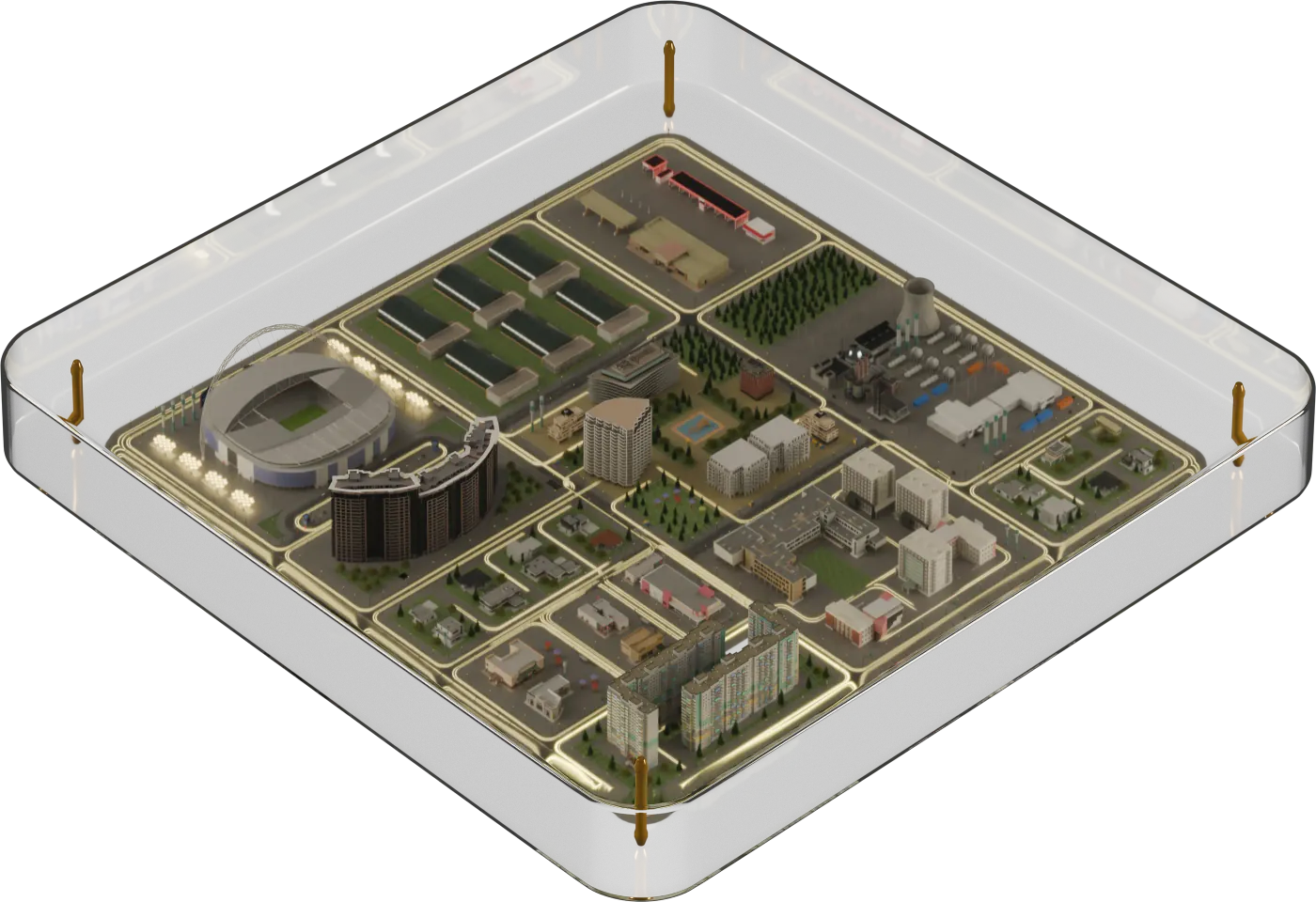
Architecture, Engineering and Surveying
Carry structure identity from design into the life of the asset.
Architects, engineers, and surveyors create some of the earliest and most important records associated with physical infrastructure.
Surveys establish location and boundaries.
Architectural documents define the structure.
Engineering records describe how it is designed and built.
Architecture, Engineering and Surveying
Survey locates it. Design defines it. PIID™ identifies it persistently.
Yet as the project moves from planning to construction, ownership, operation, insurance, financing, and long term management, those records can become disconnected from the physical asset they originally described.
The identity problem
The project has identifiers.The structure needs identity.
Architecture, engineering, and surveying workflows already contain sophisticated references.
Project numbers.
Parcel identifiers.
Drawing numbers.
Coordinates.
Building numbers.
BIM identifiers.
Survey references.
Asset tags.
Model identifiers.
Client identifiers.
Those references are valuable within the systems and projects that created them.
But they are not necessarily designed to remain with the physical structure for the life of the asset.
Once construction ends, project teams change.
Files are transferred.
Owners take control.
Platforms change.
Records move into different systems.
The physical structure remains.
PIID™ provides a persistent identity for the asset beyond the project environment.
- Survey point
- Parcel
- Drawing ID
- Project ID
- Eng. model
From project to asset
The project ends. The structure continues.
Most architecture, engineering, and surveying workflows are organized around delivery of a project.
Physical infrastructure operates on a much longer timeline.
A building may remain in service for decades after the design team, engineering consultants, surveyors, contractors, software platforms, and original owner have changed.
PIID™ creates a reference that can continue with the structure through those transitions.
Project identity is temporary. Structure identity should persist.
- Survey
- Design
- Engineering
- Construction
- Commissioning
- Operations
PIID™
Survey
Design
Engineering
Construction
Commissioning
Operations
PIID™
Surveying
Location establishes context.PIID™ establishes persistent structure identity.
Surveyors establish critical spatial relationships within the built environment.
Boundaries.
Coordinates.
Parcels.
Easements.
Improvements.
Physical locations.
Site conditions.
Those references provide essential spatial truth.
PIID™ serves a different purpose.
It persistently identifies the qualifying physical structure located within that spatial context.
Survey establishes where. PIID™ establishes which persistent structure.
Parcel and structure are different
Land identity is not structure identity.
A parcel identifies land.
A physical structure exists on that land.
One parcel may contain multiple qualifying structures.
A structure may also remain physically recognizable even as surrounding parcel relationships evolve through time.
PIID™ establishes identity at the structure level.
This distinction allows survey, property, geospatial, and enterprise records to maintain clearer relationships between:
Parcel
Structure
Location
Geometry
Persistent Identity
Know the land. Know the structure. Keep the references distinct.
Architecture
Carry the identity of the design into the physical asset.
Architectural workflows create detailed representations of what a structure is intended to become.
Plans evolve.
Models change.
Revisions accumulate.
Construction begins.
The completed structure eventually becomes an operating asset.
PIID™ provides a persistent structure identity that can support continuity between the physical asset and supported architectural references as the structure moves beyond design.
The drawing represents the structure. PIID™ identifies the structure itself.
Engineering
Connect technical records to the physical asset they describe.
Engineering information can span structural, civil, mechanical, electrical, environmental, energy, and other disciplines.
Each discipline can create records around the same physical structure.
PIID™ provides a common structure reference through which supported engineering information can remain associated with the same asset across systems and through time.
This creates stronger continuity as engineering information moves from project delivery into operations, inspections, improvements, risk analysis, and future modification.
Different disciplines. Same physical structure. One persistent identity.
PIID Resolve™
Resolve existing project and property references to the physical structure.
PIID Resolve™ identifies, validates, and resolves supported references to persistent infrastructure identity.
Supported inputs can include:
Normalized Address
Parcel
PIID™
Coordinates
Geometry
Supported Source Reference
This gives architecture, engineering, surveying, and enterprise systems a way to reconcile fragmented references to the same physical structure.
Submit a reference. Resolve the structure. Return persistent identity.
PIID Resolve™Digital delivery
The digital file should not become the identity of the asset.
Architecture and engineering environments increasingly depend on BIM, digital delivery, GIS, digital twins, cloud collaboration, and structured project information.
Those systems can maintain their own identifiers.
PIID™ provides a persistent reference to the physical structure beneath them.
A BIM model can reference PIID™.
A GIS environment can reference PIID™.
A digital twin can reference PIID™.
A facilities platform can reference PIID™.
Future systems can reference the same PIID™.
The software can change. The physical structure identity persists.
BIM and model continuity
One structure can have many models.
A physical structure may have:
A design model.
A coordination model.
A construction model.
An as built model.
A facilities model.
An operational digital twin.
Future representations that do not yet exist.
Each can represent the same physical asset.
PIID™ provides a persistent identity that can remain consistent across those representations.
One physical structure. Many digital representations. One persistent identity.
The handoff problem
Infrastructure loses context when projects change hands.
One of the most significant continuity failures in the built environment occurs during handoff.
Design teams complete their work.
Contractors close out the project.
Documents are transferred.
Owners receive files.
Facilities teams inherit the asset.
Systems change.
Critical context can become fragmented during that transition.
PIID™ provides a persistent structure identity around which supported information can continue after the project team leaves.
Handoff should transfer responsibility, not break asset identity.
Construction to operations
Carry identity across the transition from project to permanent asset.
Construction is a stage in the life of infrastructure.
PIID™ provides a structure identity capable of continuing after construction is complete.
Supported project references, structure geometry, property information, documentation, and lifecycle context can remain associated with the physical structure as it transitions into:
Ownership.
Facilities management.
Insurance.
Financing.
Maintenance.
Inspection.
Capital planning.
Renovation.
Future construction.
The completed project becomes a long lived physical asset. Its identity should already be there.
ConstructionUMIP Structure Schedule™
Document every qualifying structure on the property.
Architecture, engineering, and surveying projects frequently involve complex properties containing multiple permanent structures.
UMIP Structure Schedule™ is being developed to document each qualifying structure through its PIID™, location, geometry, and relationship to the parcel.
This can provide clearer structure level context across:
Campus environments.
Commercial properties.
Industrial sites.
Institutional facilities.
Multifamily properties.
Government complexes.
Mixed use developments.
Large infrastructure properties.
One property. Every qualifying structure. Clearly identified.
Coming Soon
In development
Multi structure projects
One project site can contain many persistent assets.
A project number may describe the entire development.
A parcel may describe the land.
A campus may share one address.
But the completed environment may contain many distinct physical structures.
PIID™ allows qualifying structures to maintain individual identities.
Structure Schedule™ can document those identities collectively.
Project level context above. Persistent structure identity underneath.
Lifecycle continuity
Design is the beginning of a much longer record.
Once a structure enters service, it can experience decades of change.
Inspections.
Repairs.
Renovations.
Additions.
Energy upgrades.
Insurance events.
Ownership changes.
Refinancing.
Maintenance.
Code updates.
Capital improvements.
Lifecycle™ provides the framework through which supported information can remain associated with the same persistent structure identity through those changes.
Design begins the asset story. Persistent identity allows the story to continue.
Lifecycle™Facilities management
Give operators continuity with the asset they inherit.
Facilities teams often inherit information created by architects, engineers, surveyors, contractors, consultants, owners, and technology providers.
PIID™ provides a persistent structure reference capable of continuing across those organizational transitions.
This can create stronger continuity between project delivery and long term operations.
The team changes. The structure remains.
Facilities ManagementRenovation and capital improvements
Future projects should recognize the structure that already exists.
A building may undergo multiple renovation and improvement programs over its life.
Each project can introduce new records, consultants, models, systems, and project identifiers.
PIID™ provides a persistent structure reference that can continue across those projects.
Rather than treating every renovation as a disconnected project environment, supported information can maintain context around the same physical structure.
New project. Same structure. Same persistent identity.
Government and public records
Connect design and engineering context to the broader infrastructure ecosystem.
Architecture, engineering, and surveying information frequently interacts with public systems.
Planning.
Permitting.
Inspections.
Property records.
GIS.
Code enforcement.
Public works.
Emergency management.
PIID™ provides a persistent structure identity capable of connecting supported public and private references to the same physical asset.
Different organizations. Same structure. Persistent identity between them.
GovernmentInsurance and lending
The structure moves into workflows far beyond design.
After project delivery, the same physical structure becomes part of insurance, financing, transactions, valuation, risk, and portfolio systems.
Those industries may never see the original project identifiers used during design.
PIID™ provides a structure identity capable of moving across those environments.
The structure should not receive a new identity every time the industry around it changes.
Geospatial interoperability
Connect survey context, geometry, and persistent identity.
Surveying, GIS, imagery, mapping, and building geometry provide different forms of spatial understanding.
PIID™ creates a persistent structure reference across supported geospatial environments.
This creates a stronger relationship among:
Survey Context
Parcel
Coordinates
Building Geometry
Physical Structure
PIID™
Location provides context. PIID™ provides persistent identity.
GIS, Mapping and Geospatial IntelligenceDigital twins and simulation
Give future models a persistent physical reference.
Digital twins and simulation platforms increasingly consume information created during design, engineering, surveying, construction, and operation.
PIID™ provides a persistent structure identity underneath those representations.
The model can evolve.
The simulation can change.
The platform can change.
The physical asset remains.
Digital representations change. Physical asset identity should persist.
Digital Twins and SimulationArtificial intelligence
AI needs persistent asset context.
AI systems are increasingly being used across architecture, engineering, construction, geospatial analysis, facilities, risk, and infrastructure planning.
Those systems can combine information from many sources.
PIID™ provides a persistent structure identity around which supported information can coordinate.
Lifecycle™ adds continuity through time.
Together, they provide stronger physical asset context for intelligent systems.
Persistent identity creates persistent machine context.
Cross system interoperability
Infrastructure information should survive the software that created it.
AEC environments use many specialized systems.
Design platforms.
Engineering software.
Surveying tools.
GIS.
Project management systems.
Common data environments.
Document management systems.
BIM platforms.
Facilities applications.
Enterprise systems.
Those systems do not need to become one platform.
PIID™ gives supported environments a common reference to the physical structure.
Different systems retain their role. Persistent identity becomes the connection point.
Data control
Identity does not require centralizing project data.
UMIP does not require architecture firms, engineering firms, surveyors, owners, contractors, or technology providers to migrate their underlying project data into one central repository.
Organizations retain their systems.
Firms retain their files.
Providers retain their data environments.
Existing identifiers can remain.
PIID™ provides the persistent structure reference through which supported information can coordinate.
Connection does not require centralization.
Enterprise delivery
Built for integration into professional and enterprise workflows.
PIID Resolve™ is designed for structured enterprise delivery.
Supported JSON responses can provide:
PIID™
Verification Context
Registry Context
Structure Context
Building Geometry
Property Context
Supported Source References
These services can support integration with:
Design Systems
Engineering Platforms
Survey Workflows
GIS
BIM Environments
Project Platforms
Common Data Environments
Digital Twins
Owner Systems
Enterprise Applications
API delivered. Machine readable. Built for integration at scale.
Built on UMIP
Persistent identity from project definition through asset operation.
PIID™
Provides persistent identity for the physical structure.
PIID Resolve™
Resolves supported project, property, and spatial references to structure identity.
Lifecycle™
Maintains continuity around structure identity through time.
UMIP Registry™
Maintains persistent infrastructure identity and supported registry context.
UMIP Structure Schedule™
Documents qualifying structures within complex properties.
Coming Soon
In development
Governed by GIIS™
Persistent structure identity requires consistent rules.
Architecture, engineering, and surveying operate across projects, clients, jurisdictions, disciplines, software environments, and decades of asset life.
GIIS™ establishes the governance framework supporting consistent Persistent Infrastructure Identity across those environments.
PIID™ provides the structure identity.
GIIS™ provides the governance foundation supporting its continuity.
Identity establishes the reference. Governance protects its continuity.
At scale
Persistent identity for the physical assets AEC creates and defines.
- 189M+PIIDs Registered Across the United States
Architecture, engineering, and surveying help establish the physical built environment.
Persistent Infrastructure Identity creates the opportunity for the asset identity established around that environment to continue long after the original project is complete.
Survey → Design → Engineering → Construction → PIID™ → Operations → Lifecycle Continuity
Architecture, Engineering and Surveying
Build the project.Preserve the identity of the asset.
The documents may change.
The models may change.
The project team may change.
The owner may change.
The software may change.
The physical structure remains.
PIID™ gives that structure a persistent identity capable of continuing from its earliest spatial and design context through construction, operation, improvement, and decades of change.
Survey locates it.Design defines it.PIID™ identifies it persistently.
Related
Resolve physical structures to persistent infrastructure identities. PIID Resolve™ identifies, validates, and resolves structures from addresses, parcels, coordinates, geometry, and supported source records.